How to set your nightly price without losing bookings or income
A price that's too high can put guests off, and one that's too low needlessly cuts your income. The right nightly price isn't one figure for the whole year. It depends on the season, demand, occupancy and what your property offers.
Owners of holiday properties often start simply. They look at what similar chalets nearby charge, pick an average and use it all year round.
That’s understandable, but it doesn’t always pay off.
A Friday night in the school holidays isn’t worth the same as a Tuesday off-season. Demand for a chalet can differ just as much between New Year’s Eve, a summer weekend and a quieter week in November.
So the aim isn’t the highest price or the most booked nights. What matters is finding the balance that gives a good result once costs are taken into account.
1. Start with your own property, not the competition’s price
When setting a price, first assess what you’re actually offering.
Location, capacity, equipment, privacy and the overall standard of the accommodation all play a part.
A chalet for ten people with a large living area, sauna and garden isn’t worth the same as a smaller house for four guests. Even two properties with the same capacity may not be directly comparable.
Look at similar accommodation in your area, but compare it on its real features. Being in the same village isn’t enough.
The total price the guest pays, including any mandatory fees, matters too.
2. Treat seasons, weekends and holidays differently
Demand for accommodation changes through the year.
In Turiec, summer dates linked to hiking can be attractive, as can winter stays when the snow is good, public holidays and long weekends.
Not every property has the same seasonal pattern, though. A house suited to family celebrations may fill up differently from a smaller chalet for couples.
That’s why it’s worth separating at least:
- Ordinary weekdays
- Weekends
- School holidays and public holidays
- Dates with higher demand
- Quieter periods outside the main season
It’s best to prepare prices for these dates in advance, not when bookings start coming in.
3. Higher occupancy doesn’t have to mean higher income
Imagine two options for one month.
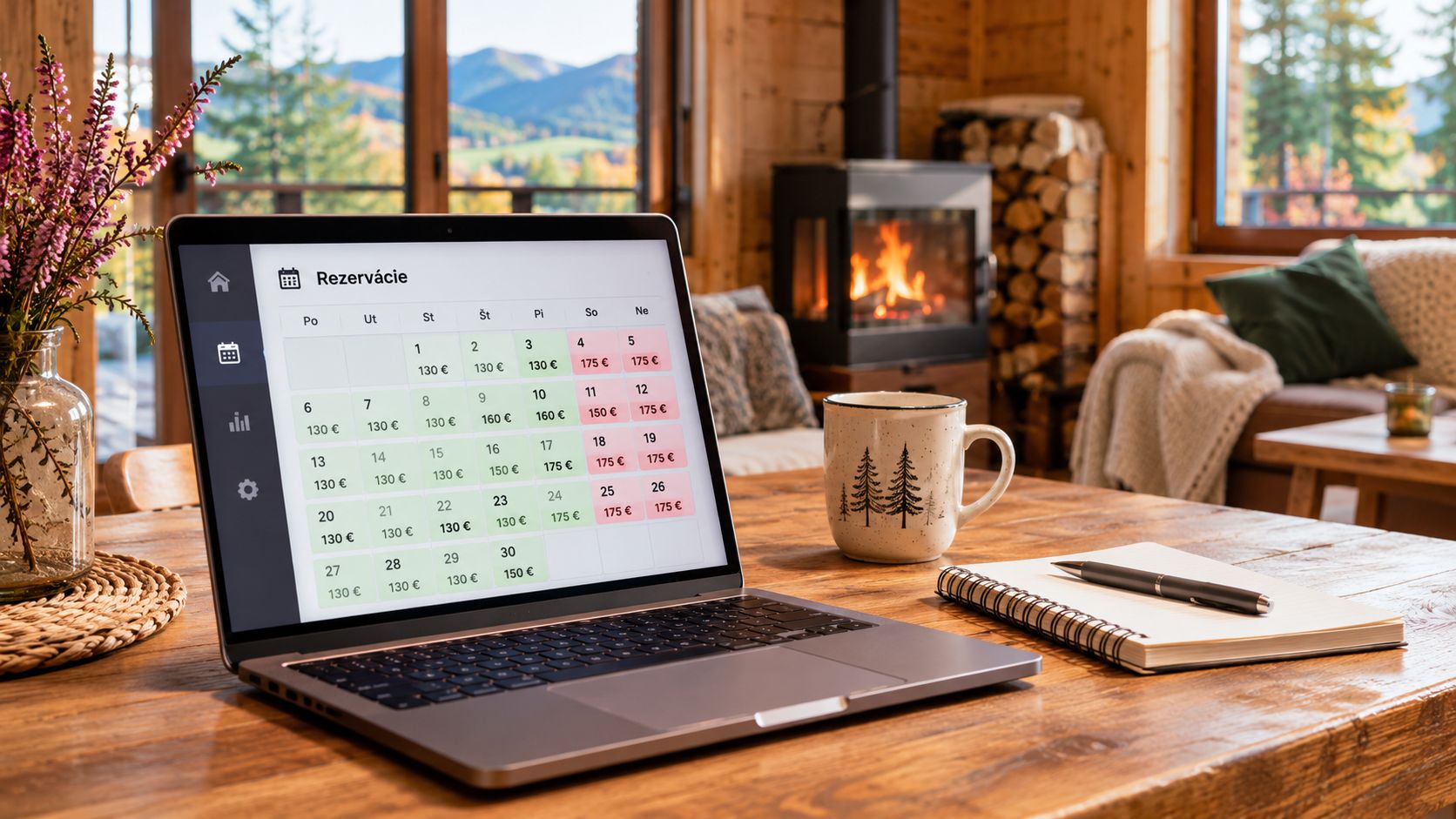
Scenario one: you let the property for 10 nights at an average of €130. Your accommodation income is €1,300.
Scenario two: you let it for 8 nights at an average of €175. Your accommodation income is €1,400.
In the second case you had fewer booked nights but higher accommodation income.
That doesn’t automatically mean the second scenario brought a higher net profit. It also depends on the number of stays, cleaning, utilities and other costs.
But the example shows why occupancy alone isn’t enough to judge how a rental is doing.
The average nightly price matters too, and so does what you actually keep after costs.
4. Set the right minimum stay
With short-term rentals, some costs arise after every departure, whether guests stayed for one night or four.
The typical example is the final clean and laundry.
So during the most sought-after weekends it can pay to set a minimum stay of two or three nights.
On the other hand, rules that are too strict can put guests off in quieter periods or leave empty gaps between bookings.
That’s why we recommend adjusting the minimum stay according to the dates and actual demand.
5. Watch how dates fill up
You don’t have to change the price every day, but you should check the calendar regularly.
If a particular weekend is booked much earlier than other dates, it may point to higher demand.
If, on the other hand, a date is getting close and many nights are still free, it’s worth reviewing the price, the terms of stay or how appealing the offer is.
A discount isn’t always the best answer, though. Sometimes it helps to allow a shorter stay, change the photos or improve the description.
What matters is responding to the specific situation, not automatically cutting the price of every free date.
6. Beware of discounts that only look good for guests
A discount on longer stays can be a sensible way to get more booked nights and fewer cleans.
But you need to work out whether the resulting income still pays off.
Do the same with special prices, last-minute offers and packages.
Before any significant discount, check what’s left after the booking platform’s fee, cleaning and other costs.
Not every booking is automatically a good booking.
7. Review your prices regularly
Even a well-set price list may not work equally well all year.
Keep an eye above all on the number of booked nights, the average nightly price, the length of stays and the income left after costs.
If you have enough data, compare similar periods and take holidays, the weather and any changes to the property’s equipment into account.
With a new property, you may need to test prices first. You’ll gradually find out which dates have the most potential and where the offer needs adjusting.
How we approach pricing
For every property, we agree the minimum prices and basic rental rules with the owner.
We then keep track of demand, occupancy and the prices of comparable accommodation, and adjust the pricing and booking terms as things develop.
Our goal isn’t to fill the calendar at any cost, but to find the best possible result within the terms we’ve agreed.
Not sure whether your prices are set correctly?
At a free consultation we’ll look at your property, your current prices and how they could be adjusted. Even if you’re not renting it out yet, we’ll help you work out suitable prices to start with.